News
Inside Luxembourg: National Day
17 June 2026
By Isabelle Frisch-Koopmans
Some celebrations are joyful not only because they are festive, but because they bring together history, identity and shared tradition. Luxembourg’s National Day is one of those moments. It is filled with light, music, ceremony and celebration, yet behind the festivities lies a longer story about monarchy, national identity and the ways in which a country chooses to honour itself.
For families, the National Day offers a beautiful opportunity to talk about what national traditions actually mean. Why is the day celebrated in June, even though it is linked to the sovereign’s birthday? Why are there two different hymns – one for the nation and one for the Grand Ducal House? And why do celebrations in some places already begin on the evening before?
Why is Luxembourg's National Day celebrated on 23 June?
Today, Luxembourg celebrates its National Day on 23 June, but this date was not always fixed. Since the 18th century, it had been customary to celebrate the ruler’s birthday and this tradition continued after Luxembourg became a sovereign state in 1815.
During the long reign of Grand Duchess Charlotte, whose birthday fell on 23 January, the official celebration took place in winter. In 1961, a grand‑ducal decree moved the public celebration to 23 June – mainly for climatic reasons. This date has remained unchanged ever since, under Grand Duke Jean and Grand Duke Henri.
This explains something children often find fascinating: although the day is still formally linked to the sovereign, it has become a true national celebration shared by the whole country. That is why the word Nationalfeierdag feels so natural in Luxembourg.
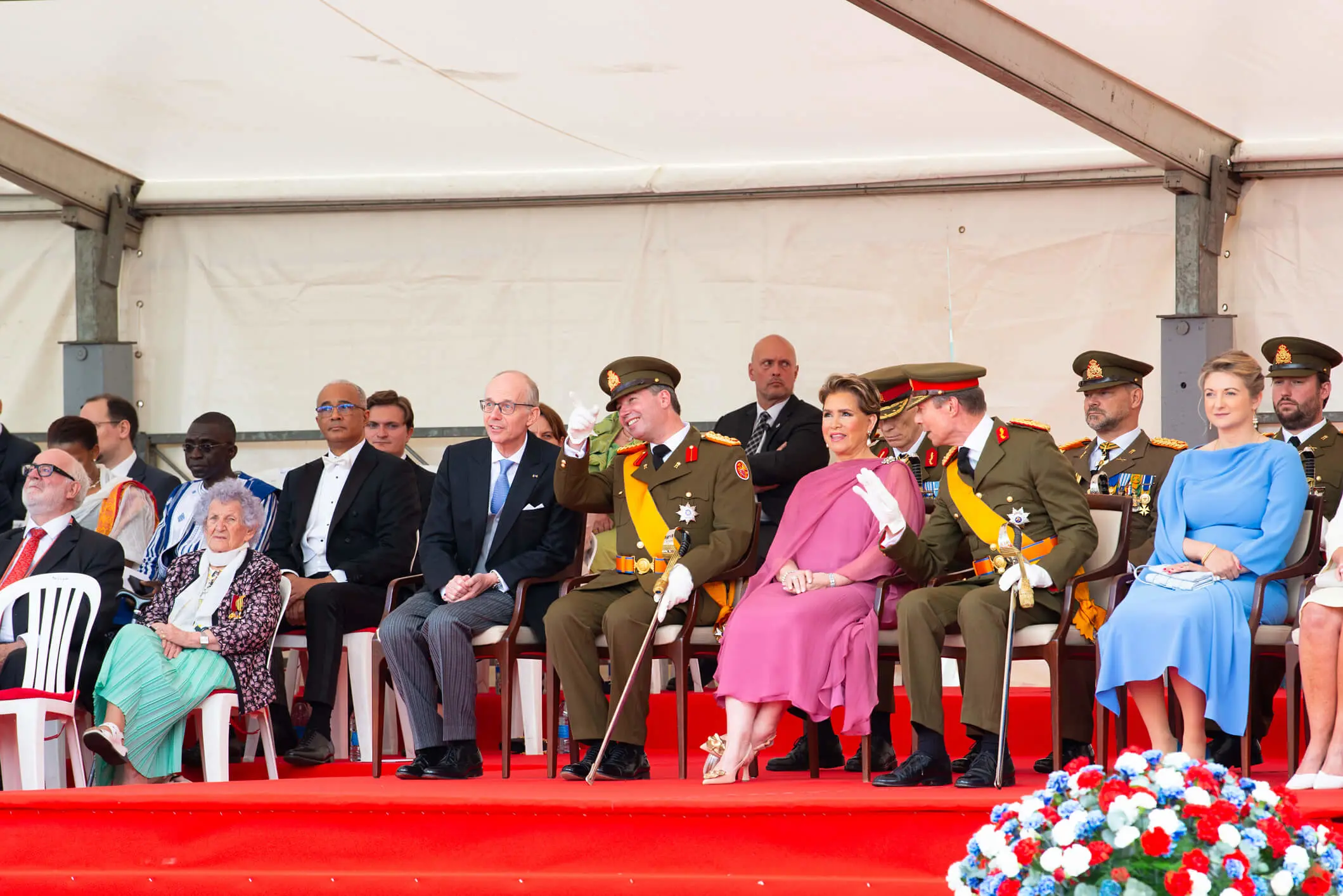
Luxembourg's royal family watch the National Day parade © Beritk, Dreamstime
How is National Day celebrated?
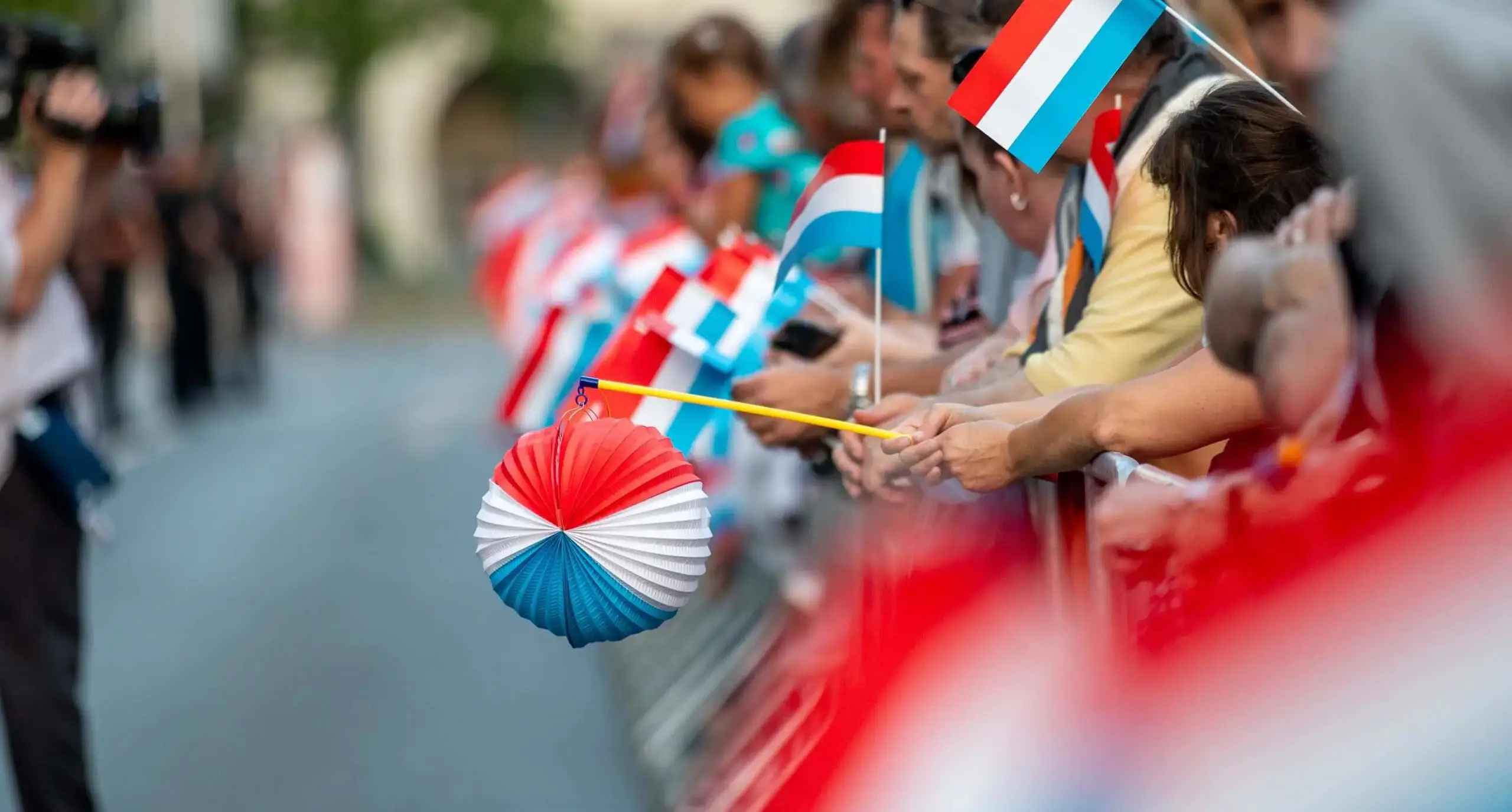
National Day is not limited to Luxembourg City. Across the country, towns and villages mark the occasion in their own way, and this local participation is one of the celebration’s most charming aspects. Many communes begin their festivities on the evening of 22 June, while others focus on 23 June itself. Each municipality contributes its own rhythm while still sharing in the wider national celebration.
For families, this makes the day feel close and accessible. National identity is expressed not only through official institutions, but also through neighbourhood festivities, local concerts, communal gatherings and the familiar atmosphere of towns and villages celebrating together.
The festivities traditionally begin on 22 June, when Luxembourg City hosts major public celebrations, including concerts, the torchlight procession and fireworks.
On 23 June 2026, a central element of the programme is the official ceremony at the Philharmonie Luxembourg at 10 a.m. The government announced this event as a major public ceremony attended by the Grand Duke and Grand Duchess, members of Parliament, the government, the Council of State, the judiciary, the municipal council of Luxembourg City, the diplomatic corps and registered members of the public.
This highlights the civic and state dimension of National Day. Alongside the traditional Te Deum, the ceremony at the Philharmonie places visible emphasis on public institutions and on a national celebration that belongs to citizens as well.
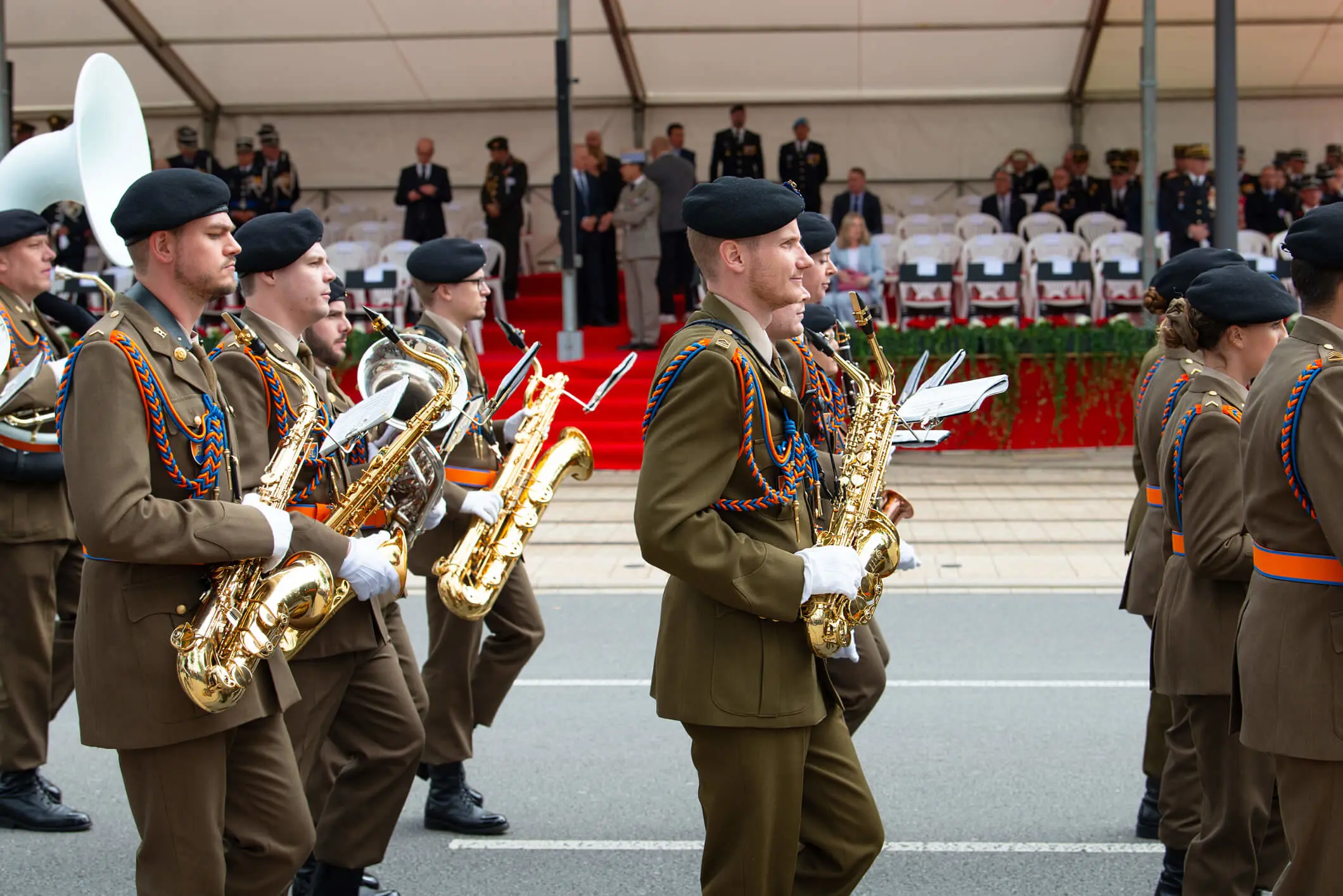
National Day military parade © Beritk, Dreamstime
Later in the day follow the gun salute, the military parade and the Te Deum at the cathedral. The day thus brings together state ceremony, dynastic representation, public festivity and religious tradition in one shared national rhythm.
One visible difference this year is that the Grand Ducal Couple will not visit Esch‑sur‑Alzette on the eve of National Day. Instead, the official visit will take place in Differdange, while Esch had already been included earlier in the year through the Joyeuses Entrées.
The national anthem: “Ons Heemecht”
Luxembourg’s national anthem, Ons Heemecht (“Our Homeland”), features text by Michel Lentz and music by Jean‑Antoine Zinnen. Written in the 19th century, it later came to be recognised as the national anthem, with its status formally confirmed in 1993.
The song is deeply rooted in Luxembourg’s landscape and identity. Its imagery evokes rivers, vineyards and homeland, and its closing sentiment is one of attachment, protection and freedom.
The title already reveals much of its meaning: Ons Heemecht is not a dynastic hymn but a song about the homeland itself — a cultural expression of Luxembourgish identity.
The hymn of the Grand Ducal House: “De Wilhelmus”
Alongside the national anthem stands the hymn of the Grand Ducal House, De Wilhelmus. It is played when the Grand Duke, the Grand Duchess or members of the Grand Ducal Family officially arrive at or leave a ceremony.
Its history is particularly interesting. The Luxembourgish Wilhelmus shares a common origin with the Dutch version; the early text was identical. A first Luxembourgish adaptation appeared in 1915, followed by a new version written in 1919 by Nik Welter for the wedding of Grand Duchess Charlotte. It was first performed on 23 January 1920.
The distinction is essential: Ons Heemecht honours the nation, while De Wilhelmus honours the Grand Ducal House.
National Day 2026
In 2026, National Day falls on Monday, 22 June, and Tuesday 23 June. Public listings describe celebrations in Luxembourg City on the evening of 22 June — concerts, ceremonial events, the torchlight procession and fireworks — followed on 23 June by the official ceremony, cannon salute, military parade and the Te Deum.
The wider festive programme also includes music events such as City Sounds 2026, organised in connection with the National Day celebrations. Beyond the capital, the spirit of the feast remains national and communal, as towns and villages across Luxembourg celebrate in their own way.
Word of the Week
Nationalfeierdag – National Day
Phonetics (LOD): ˈnaːtsionaˌfɑɪ̯ɐtaːk
„De Nationalfeierdag gëtt all Joer den 23. Juni gefeiert.“ — “National Day is celebrated every year on 23 June.”
Recipe: Strawberry tartlets with homemade sponge base
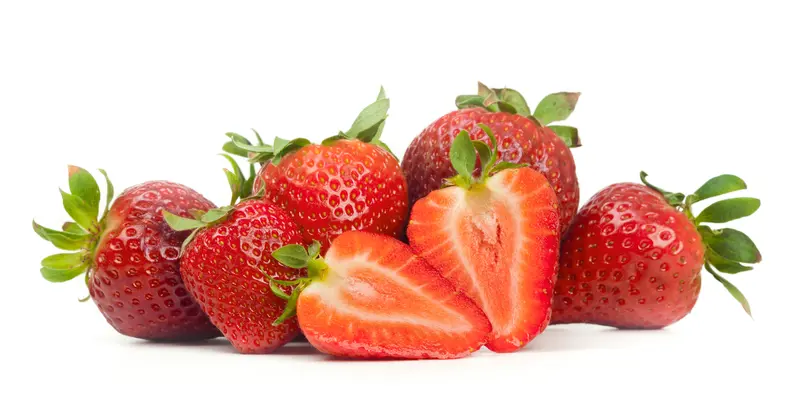
A National Day table often feels especially beautiful when it includes something light, elegant and summery. Small strawberry tartlets with homemade sponge are perfect for late June: they look festive, taste fresh and can easily be shared with family or guests.
Ingredients for the sponge base
- 3 eggs (room temperature)
- 90 g sugar
- 1 tsp vanilla sugar (optional)
- 90 g plain flour
- 1 pinch of salt
Ingredients for the topping
- 250 g strawberries
- 250 ml milk
- 2 egg yolks
- 50 g sugar
- 20 g cornstarch
- 1 tsp vanilla extract
- A little icing sugar
- A few mint leaves, optional
Instructions
- Preheat the oven to 180°C (top/bottom heat). Grease a muffin or tartlet tray, or line it with paper cases.
- For the sponge, beat the eggs, sugar, vanilla sugar and a pinch of salt with a hand mixer for several minutes until the mixture is very light, thick and airy.
- Sift the flour over the mixture and carefully fold it in with a spatula, keeping as much air in the batter as possible.
- Spoon the batter into the tray so that each mould is about two‑thirds full.
- Bake for about 10–12 minutes until the sponge tartlets are light golden and spring back when gently pressed. Let them cool completely, then carefully remove them from the tray.
- For the vanilla cream, heat most of the milk with the vanilla.
- Mix the remaining milk with the egg yolks, sugar and cornstarch, then stir this mixture into the warm milk and cook gently while stirring until the cream thickens. Let it cool.
- Wash and slice the strawberries.
- Place each sponge tartlet on a plate, top with a spoonful of vanilla cream and arrange the strawberry slices on top.
- Finish with a little icing sugar and, if you like, a few mint leaves.
These tartlets are lovely for a family gathering on 22 or 23 June. Their light sponge base and fresh strawberries make them feel just as festive as the day itself.
Luxembourg’s National Day is more than a public holiday. It brings together dynastic tradition, national memory, music, ceremony and the simple joy of celebrating together in towns, villages and city streets.
For children, the day opens gentle but meaningful questions: what makes a homeland feel like home, why traditions change over time and how one celebration can carry both royal ceremony and popular joy. In this sense, the Nationalfeierdag is not only festive, but also a beautiful way of telling Luxembourg’s story.
Léif Gréiss,
– Isabelle
- This article is part of our “Inside Luxembourg” series, celebrating the stories, flavours and traditions that shape our local culture.
Learn more about Luxembourg
-

Inside Luxembourg: September magic
September's Inside Luxembourg column by St George's Luxembourgish teacher Isabelle Frisch-Koopmans explores the Shueberfouer, wine festivals, Charly Gaul Randonée and offers a recipe for Gromperekichelcher.
-

Inside Luxembourg: Summer days
Inside Luxembourg with Isabelle Frisch-Koopmans this week provides an overview of summer activities grouped by age, a short preparation checklist, and two simple recipes for warm days.
-

Inside Luxembourg: Nobel Prize stories
Inside Luxembourg with Isabelle Frisch-Koopmans this week discovers two remarkable Nobel Prize laureates: Gabriel Lippmann and Jules Hoffmann.
-

Inside Luxembourg: National Day
Inside Luxembourg with Isabelle Frisch-Koopmans this week explores National Day on 23 June, a cherished event that brings together history, identity and shared tradition.